


Cruise Cabin Secrets Revealed: 7 Money-Saving Tricks First-Timers Miss

Updated: Feb 6
Booking your first cruise can feel overwhelming, especially when you see how much cabin prices vary across the same sailing. A balcony suite might cost twice as much as an interior cabin, yet both get you access to the exact same ship, entertainment, food, and ports of call. So where should you actually spend your money, and where can you safely cut back?
After years of helping travelers from our Omaha-based agency book cruises nationwide, I have seen the same mistakes repeated over and over. First-timers often overspend on their cabin because they assume more expensive always means better. But the truth is, your cabin is mostly a place to sleep and shower. The real cruise experience happens everywhere else on the ship.
Let me walk you through seven cabin secrets that can save you hundreds of dollars without sacrificing your vacation quality.
1. Book an Interior Cabin and Spend the Savings on Excursions
The biggest money-saver most first-timers overlook is simple: skip the window. Interior cabins are often $200 to $600 cheaper per person than oceanview or balcony rooms, depending on the cruise length and line. That savings alone could cover a private shore excursion, a specialty dining package, or even flights to your embarkation port.
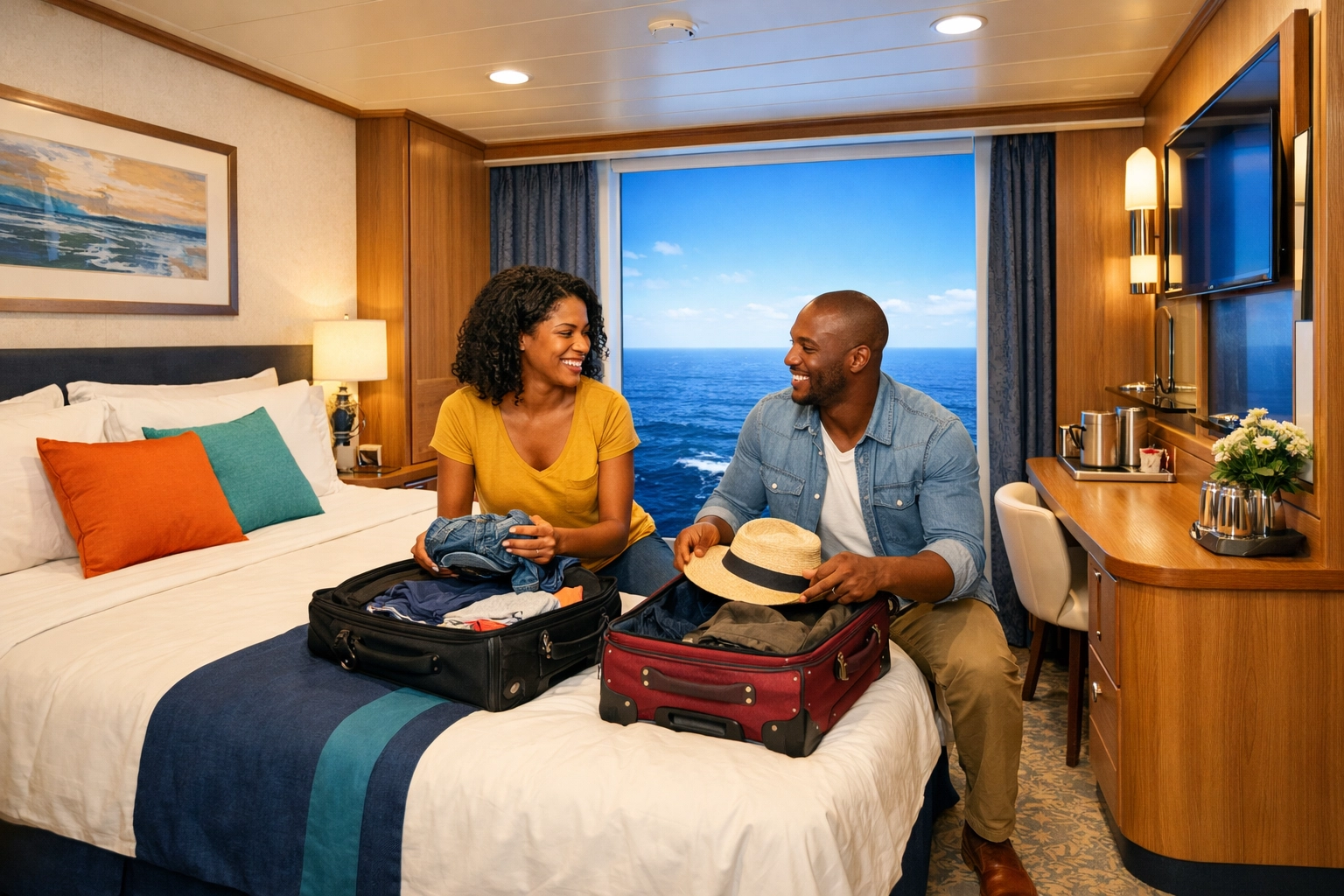
Think about how you will actually use your cabin. Most cruisers wake up, grab breakfast, and spend the day exploring the ship or visiting ports. You might return to your room around midnight to sleep. Why pay a premium for a view you will barely see?
Interior cabins on modern ships like Royal Caribbean or Norwegian Cruise Line still include a private bathroom, comfortable bedding, and all the storage you need. Some even feature virtual balconies with live ocean views on a screen.
If you are someone who needs natural light to feel comfortable, an interior cabin might not work for you. But if your priority is experiencing the destination rather than lounging in your room, this is the easiest place to cut costs.
2. Let the Cruise Line Pick Your Cabin for an Instant Discount
This trick feels counterintuitive, but it works. When you book a "guarantee" cabin, you select a cabin category (interior, oceanview, balcony) but let the cruise line assign your specific room number closer to the sail date. In exchange, you get a lower price, sometimes $50 to $150 less per person than choosing your exact cabin location.
The tradeoff is simple: you give up control over your deck and location. You might end up near the elevator, above the theater, or at the far end of a hallway. But you might also get lucky. If your cabin category sells out, the cruise line could bump you into a better room at no extra cost.
Guarantee cabins work best if you are flexible and do not have strong preferences about being near specific amenities. Families with young kids might want to avoid this option if being close to kids clubs or pools matters. But for couples or solo travelers who plan to roam the ship anyway, it is a low-risk way to save money.
3. Book Early for Perks or Wait Until the Last Minute for Discounts Especially if It’s Your First Cruise
Timing your cruise booking is part strategy, part luck. If you book six to twelve months in advance, you lock in lower base prices and often gain access to early booking perks like onboard credits, free drink packages, or cabin upgrades. Cruise lines reward advance planners because it helps them fill ships early.
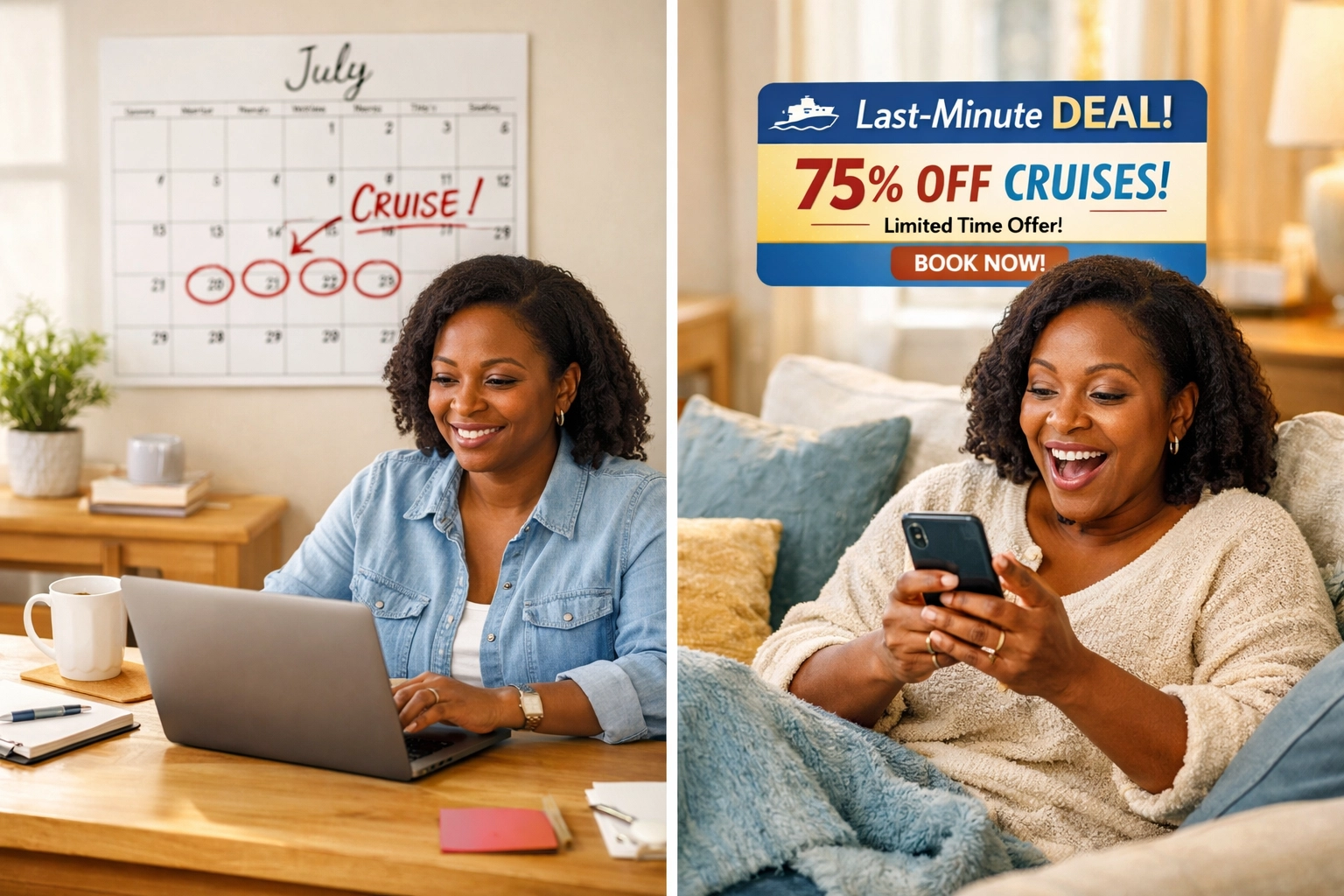
But if your schedule is flexible and you can pack on short notice, last-minute bookings can deliver serious discounts. About 60 to 90 days before departure, cruise lines start slashing prices on unsold cabins. I have seen rates drop 30% or more during wave season or slow booking periods.
The downside to waiting is obvious: you might not get the sailing date, itinerary, or cabin type you want. Popular Alaska cruises in summer or Caribbean sailings during school breaks often sell out early. But if you can cruise during shoulder season or mid-week departures, last-minute deals can be a goldmine.
As your personal travel planner, I monitor pricing trends and can alert you when rates drop for a sailing you are considering.
4. Monitor Your Booking and Rebook if the Price Drops
Here is a secret most cruise lines will not advertise: you can rebook at a lower price if rates drop after your initial reservation. Cruise pricing is dynamic, meaning it fluctuates based on demand, inventory, and promotions. If you book early and the price falls later, you are not locked into the higher rate.
Most lines allow you to cancel and rebook without penalty up to a certain point before departure (usually the final payment deadline). Some will even let you keep perks from your original booking while applying the new lower rate. The key is staying on top of your reservation and checking prices regularly.
This is where working with a cruise travel agent becomes invaluable. I track pricing for my clients and handle the rebooking process when it makes sense. You should not have to spend hours refreshing cruise line websites hoping to catch a deal.
5. Consider Older Ships for the Same Cruise Line Experience
Newer ships come with flashy features like waterslides, robot bartenders, and multi-story atriums. But they also come with higher price tags. If you are more interested in visiting ports than testing out the latest onboard gimmicks, booking an older ship in the same cruise line fleet can cut your cabin cost significantly.
Older vessels still offer excellent service, comfortable cabins, and the same itineraries as their newer counterparts. You might miss out on some trendy amenities, but you will enjoy smaller crowds, a more relaxed vibe, and lower fares across all cabin categories.
Lines like Oceania Cruises and Regent Seven Seas maintain their older ships beautifully, offering a refined experience without the premium pricing of brand-new builds.
6. Travel During Shoulder Season to Avoid Peak Pricing
Cruise pricing spikes during school holidays, summer months, and major holiday weeks. If you can travel just before or after these peak windows, you will find significantly lower cabin rates and fewer crowds onboard.
For Caribbean cruises, shoulder season typically falls in late April through early June and again in September through early November (outside hurricane season's peak). Alaska shoulder season hits in May and September. Mediterranean cruises are cheaper in early spring and late fall.

The weather during shoulder season is often just as pleasant as peak times, and ports are less overrun with tourists. You also have a better chance of scoring cabin upgrades or last-minute deals during these periods.
From my Omaha office, I help clients nationwide find ideal shoulder-season sailings that match their vacation window and budget. Sometimes shifting your travel dates by just one or two weeks can save you enough to upgrade your cabin category or add an extra night at your embarkation city.
7. Skip the Balcony Unless You Will Actually Use It
Balcony cabins sound luxurious, and cruise lines market them heavily. But ask yourself honestly: will you really spend time sitting on a small private balcony, or will you prefer the public decks with more space, better views, and access to food and drinks?
Balconies make sense for certain scenarios. If you are cruising Alaska or Norway where scenery is breathtaking and you want private wildlife viewing, a balcony is worth it. Same if you are someone who enjoys morning coffee in solitude or needs an outdoor space to decompress.
But for warm-weather Caribbean or Mediterranean cruises where you will be poolside, exploring ports, or at the main deck anyway, a balcony often goes unused. That extra $400 to $800 per person could fund spa treatments, excursions, or even another short cruise later in the year.
An oceanview cabin with a window gives you natural light and a view at a fraction of the balcony cost. It is the middle-ground option many first-timers overlook.
How a Personal Travel Planner Helps You Stack These Strategies
These seven tricks work even better when combined. Book a guarantee interior cabin during shoulder season, rebook if the price drops, and suddenly your cruise costs half of what you initially expected. But juggling all these variables takes time and expertise.
As an Omaha-based travel agent serving clients across the country, I track promotions, monitor cabin inventory, and know which cruise lines offer the best value for specific itineraries. I also handle the tedious parts like rebooking when prices fall or chasing down onboard credits you are owed.
When you work with a cruise travel agent, you are not just getting a booking. You are getting someone who understands how cruise pricing works, knows when to wait and when to lock in a rate, and can recommend cabin locations that match your priorities.
Ready to Book Smarter?
First-time cruisers often spend more than necessary because they do not know these cabin secrets exist. But now you do. Whether you want to explore Europe with Oceania, experience luxury river cruising with Viking, or sail the Caribbean with Norwegian, these strategies apply across the board.
If you are ready to start planning your first cruise and want someone to help you navigate pricing, cabin selection, and booking timing, reach out for a free quote. I will walk you through your options and make sure you get the best value without missing out on the experience you want.
Your cabin does not have to be the most expensive part of your cruise. Let's find you a smart option that leaves more room in your budget for the parts of the trip you will actually remember.
Comments