


Iceland in Winter vs. Summer: Which Is Better For Your Dream Vacation?

Updated: Feb 4
Picture this: You're standing at the edge of a waterfall in Iceland. In one version of this daydream, it's 11 PM and the sun is still hovering above the horizon, casting golden light across fields of lupine flowers. In the other, it's 3 PM, twilight is already settling in, and the frozen cascade behind you looks like something straight out of Narnia.
Both versions are spectacular. Both are completely real. And choosing between them? That's where most travelers get stuck.
Here's the truth: There is no objectively better time to visit Iceland. What matters is what you actually want to experience: and what you're willing to trade off to get it. As your Omaha travel agent with clients who've explored Iceland in every season, I've seen how different this country becomes depending on when you go.
Let me walk you through what each season really delivers, so you can make the call that fits your dream trip.
What Makes Iceland Different From Other Destinations
Before we dive into the seasonal breakdown, here's what sets Iceland apart: This island doesn't just change with the seasons: it transforms completely. We're not talking about subtle shifts in weather or crowds. We're talking about landscapes that physically alter, daylight that swings from 24 hours to barely 4, and activities that are only possible during specific months.
Most European destinations give you variations on a theme. Iceland gives you two entirely different experiences under the same name.
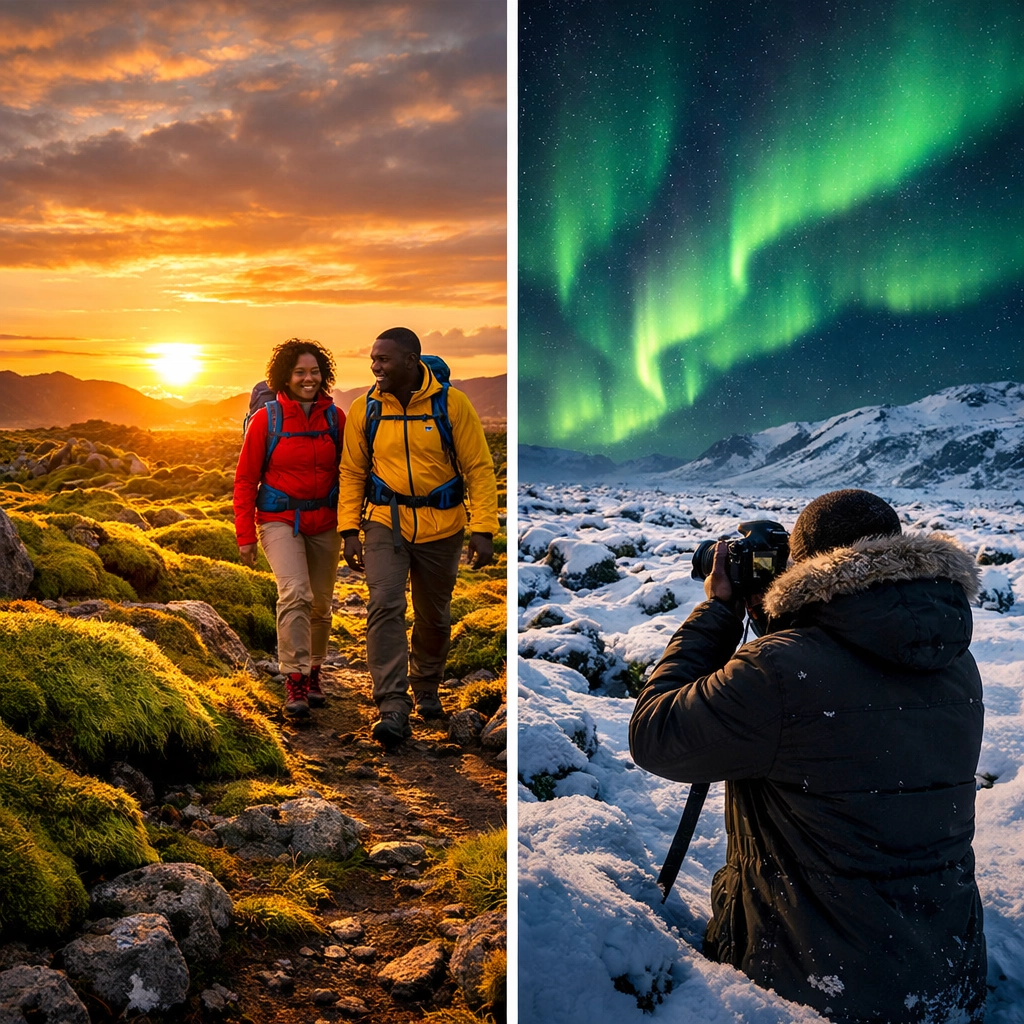
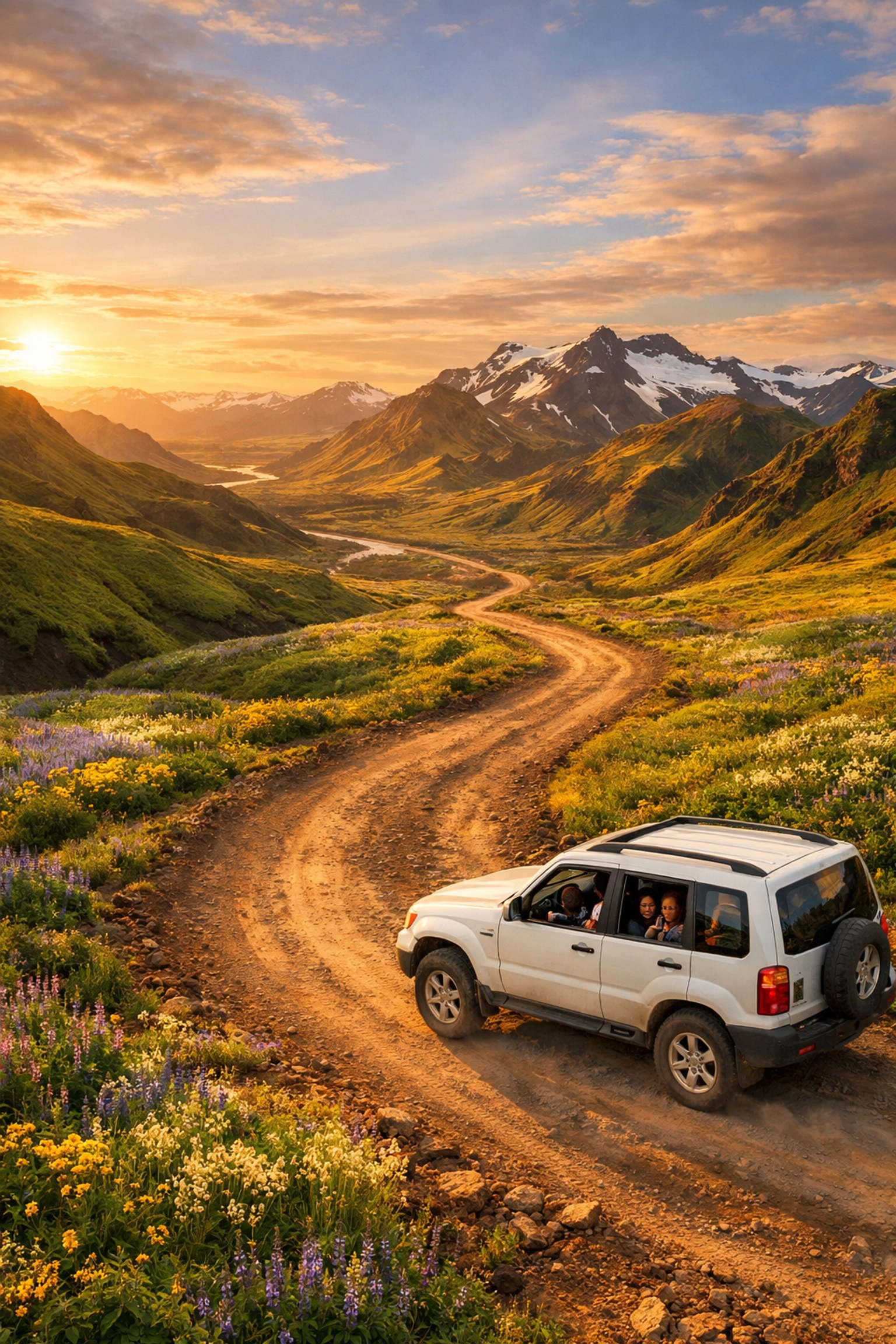
Summer in Iceland: The Land of Midnight Sun
Best for: Hikers, road-trippers, photographers chasing endless golden hour, families, and anyone who wants maximum exploration time.
From late May through August, Iceland becomes one of the most accessible places on Earth. The midnight sun means you genuinely have near-constant daylight to work with. That 8 PM dinner? You'll still have hours of brilliant light afterward to wander, hike, or drive to another waterfall.
What You Gain in Summer
The highland roads (called F-roads) open up, which means you can tackle routes that are completely inaccessible in winter. The full Ring Road is drivable without white-knuckle stress. The Westfjords: one of Iceland's most dramatic and remote regions: become reachable. Museums and smaller attractions outside Reykjavík keep extended hours or are only open during high season.
Temperature-wise, you're looking at averages around 10-15°C (50-59°F). Not exactly beach weather, but comfortable for layered outdoor exploration. The landscapes explode into vibrant greens, wildflowers bloom across the countryside, and Iceland sheds its icy reputation for something surprisingly lush.
If you're into hiking, summer is your window. Trails are clear, conditions are safer, and multi-day treks in places like Landmannalaugar or Þórsmörk are at their peak.
What You Give Up in Summer
Popularity comes at a cost. Summer prices are roughly three times higher than winter rates: hotels, car rentals, tours, everything inflates. Accommodations book out months in advance, especially in smaller towns. The crowds at major sites (Geysir, Gullfoss, Seljalandsfoss) can feel overwhelming, particularly during July and August.
And here's the big one: You won't see the Northern Lights. The midnight sun that makes summer so magical also makes aurora viewing impossible. If that's a non-negotiable item on your list, summer is automatically off the table.
Winter in Iceland: The Frozen Frontier
Best for: Northern Lights chasers, budget-conscious travelers, photographers who love dramatic contrast, and anyone seeking a more intimate, otherworldly experience.
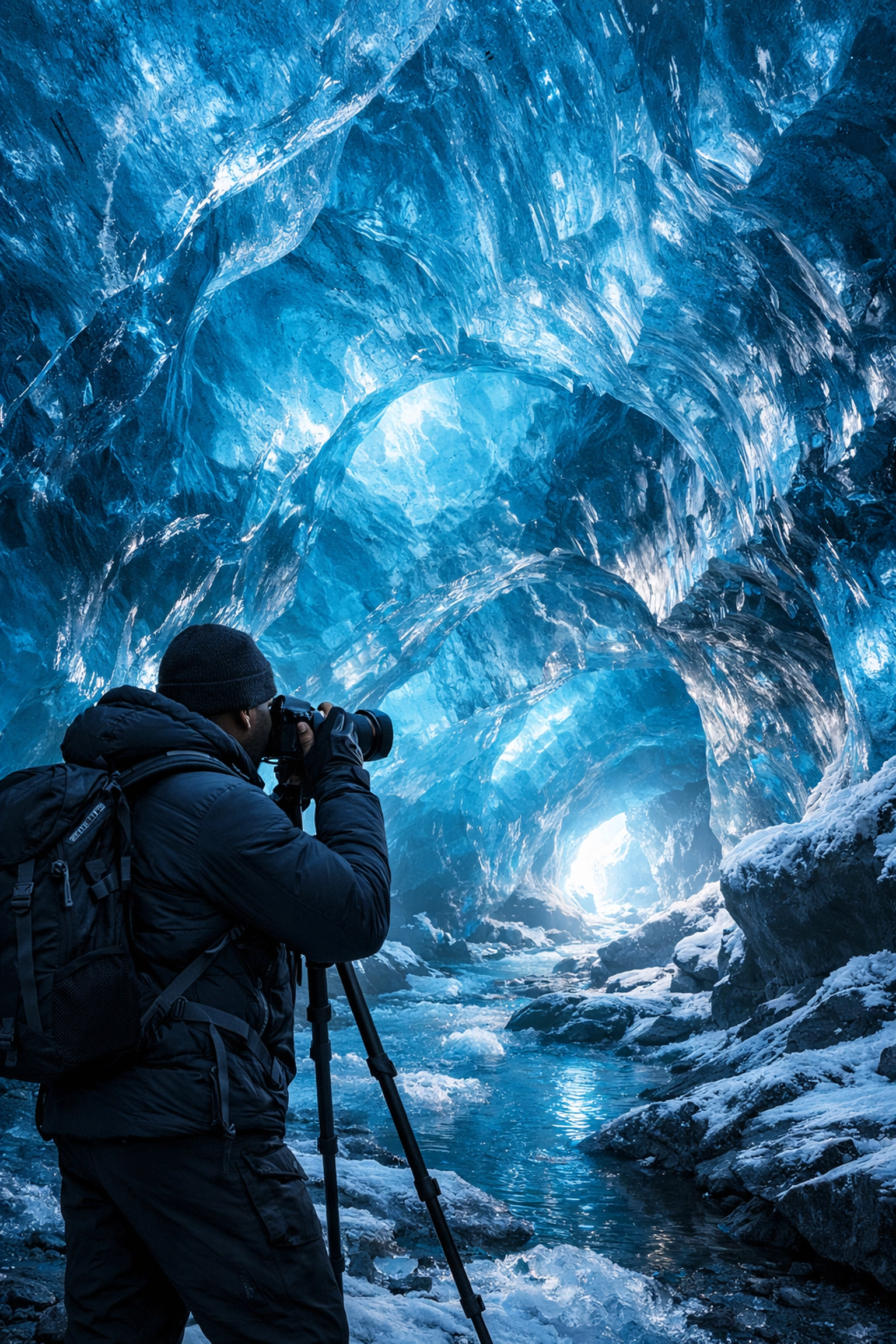
Winter in Iceland (late November through March) is not a softened version of summer. It's a completely different country. The landscapes become stark, dramatic, and hauntingly beautiful. Waterfalls freeze mid-cascade. Ice caves form in glaciers: caves you can actually walk inside, surrounded by ancient blue ice. And the Northern Lights dance across dark skies that arrive as early as 4 PM.
What You Gain in Winter
Cost savings are massive. We're talking 50% cheaper rates across accommodations, car rentals, and tours compared to summer. The crowds thin out dramatically: you'll often have iconic sites nearly to yourself.
The activities shift to things you simply cannot do in summer: glacier ice cave tours (only safe when temperatures are cold enough to stabilize the ice), snowmobiling across vast white expanses, witnessing frozen waterfalls, and aurora hunting under some of the darkest skies in Europe.
There's something deeply magical about Iceland in winter. The limited daylight creates a perpetual golden-hour quality to the light. The starkness makes every landscape feel cinematic. And the Northern Lights? On a clear night, it's one of the most profound natural experiences you'll ever witness.
What You Give Up in Winter
Daylight shrinks to about 4-5 hours per day at the winter solstice. That doesn't mean pitch blackness the rest of the time: you get long, beautiful twilight periods: but your actual exploration window is condensed.
Driving becomes significantly more challenging. Icy roads, sudden weather changes, and reduced visibility require constant caution. Some routes close entirely. The highlands are inaccessible. The Westfjords and northern regions become difficult or dangerous to reach.
Average temperatures hover around -2°C (28°F), but wind chill can make it feel much colder. You'll need serious layering and quality gear. Some hiking trails become unsafe or impossible due to ice and snow.
The Decision Framework: Which Season Matches Your Goals?
Let's get practical. Here's how to choose based on what actually matters to you.
Choose summer if:
You want maximum time to explore without racing against daylight
Hiking and trekking are central to your trip
You're traveling with kids or anyone who prefers milder weather
You want to complete the full Ring Road or reach remote areas like the Westfjords
You're willing to pay premium prices and navigate crowds for accessibility
The Northern Lights aren't a priority
Choose winter if:
Seeing the Northern Lights is a bucket-list must
You're drawn to dramatic, frozen landscapes and ice caves
Budget is a significant consideration (that 50% savings is real)
You prefer fewer crowds and more intimate experiences
You're comfortable with limited daylight and challenging driving conditions
Winter activities like snowmobiling and glacier ice cave tours excite you
Choose shoulder season (April-May or September-October) if:
You want a middle ground: better prices than summer, longer days than winter
You're hoping to catch early or late Northern Lights activity
You can be flexible with weather-dependent plans
You want fewer crowds without full winter intensity
What About the Golden Circle?
Iceland's Golden Circle: the classic route covering Þingvellir National Park, Geysir geothermal area, and Gullfoss waterfall: is spectacular year-round. In summer, you get accessibility and vibrant landscapes. In winter, you get frozen waterfalls and fewer tour buses. Neither is objectively better; it depends entirely on which version of "spectacular" resonates with you.
Let's Talk About Your Iceland Trip
Here's what I tell clients when they're torn: Iceland rewards repeat visits. If you're already dreaming about both seasons, consider planning for the one that matches your current priorities: and saving the other for next time.
As an Omaha-based personal travel planner working with travelers nationwide, I help people cut through the decision paralysis and build Iceland itineraries that actually match their goals. Whether that's maximizing Northern Lights chances, stretching your budget further, or designing a summer road trip that hits all the hiking trails on your list.
Want to talk through which season makes sense for your specific trip? Reach out for a travel consultation: we'll map out timing, realistic expectations, and whether Iceland in winter or summer delivers what you're actually hoping to experience.
Because the best time to visit Iceland isn't winter or summer. It's the season that gets you excited enough to finally book the trip.
Comments