


The Content Game: How to Start Building Your Travel Influencer Portfolio (Part 2)

Here's what nobody tells you about building a travel influencer portfolio: You don't need a $3,000 camera to get started. In fact, some of the most compelling travel content I've seen was shot entirely on an iPhone while waiting for a delayed flight in Amsterdam. What you do need is an eye for storytelling, consistency, and the willingness to look slightly ridiculous taking 47 photos of the same gelato cone until the light hits just right.
As your Omaha-based travel advisor with clients worldwide, I've watched countless aspiring creators struggle with the same question: "How do I actually build this thing?" So let's break down the practical, unsexy work that turns wanderlust into a working portfolio: no film school required.
Start With What You Already Have
Before you drop money on gear, audit your phone's camera roll from your last three trips. What patterns emerge? Are you drawn to architectural details, local food markets, candid street scenes, or sweeping landscapes? This natural gravitational pull is your content niche trying to reveal itself.
Your portfolio needs a clear specialty. "I create tourism UGC" is vague. "I create 15-second Reels showcasing boutique hotel breakfast spreads with natural lighting" tells a brand exactly what you deliver. The tighter your focus, the easier it becomes to attract the right partnerships.
Photography Basics That Actually Matter
Forget everything you've heard about the "rule of thirds" for a second. Here's what beginners need to master first:
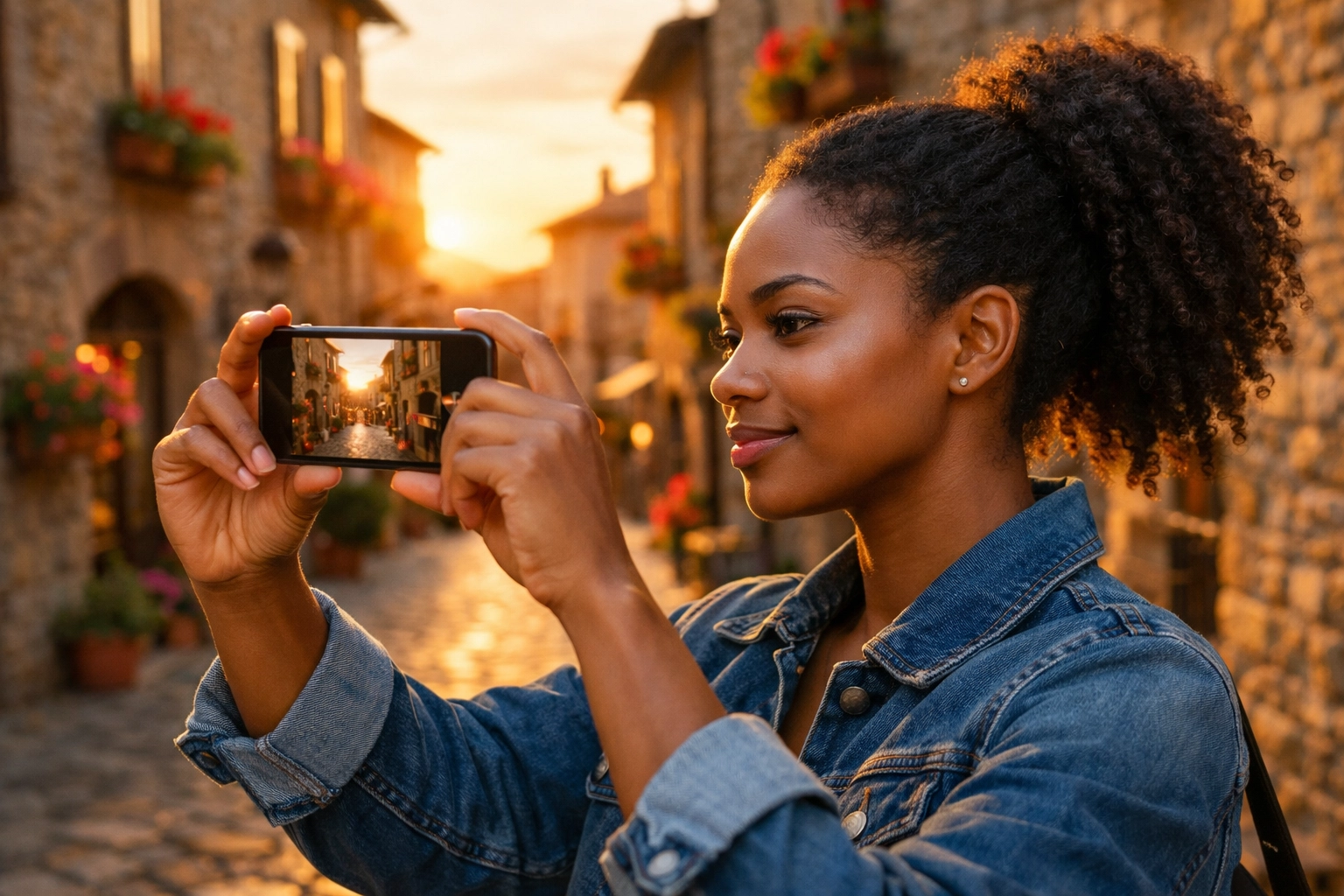
Lighting is everything. Shoot during golden hour (the hour after sunrise and before sunset) whenever possible. If you're stuck with harsh midday sun, find shade or shoot through sheer curtains. Your phone's portrait mode can fake depth, but it can't fix bad lighting.
Keep your subject's full head in the frame. I know this sounds obvious, but you'd be shocked how many aspiring influencers accidentally decapitate their models by cropping too tight. If you're featuring people in your shots, make sure their entire head: hair, hat, forehead, and all: is visible. Headless travel photos don't exactly scream "professional portfolio."
Shoot more than you think you need. Take 20 versions of the same shot with slight variations in angle, distance, and framing. You'll thank yourself during editing when you realize the "perfect" shot had a tourist photobombing in the background.
Develop a consistent editing style. Pick 2-3 presets or filters and stick with them across your entire portfolio. This visual consistency is what makes your work instantly recognizable: and what brands look for when evaluating whether you'll match their aesthetic.
Video Content for Beginners
If the thought of creating video makes you break out in hives, start here: 10-second B-roll clips with no talking. Film yourself stirring coffee at a Parisian café. Capture your hand reaching for a train ticket. Record your feet walking along a cobblestone street. String 4-5 of these clips together with trending audio, and congratulations: you've created a Reel.
The secret to good travel video isn't fancy transitions or complex editing. It's capturing small, relatable moments that make viewers feel like they're experiencing the journey alongside you. A shaky clip of you laughing while trying to pronounce a menu item in broken Italian will outperform a perfectly stabilized drone shot every single time.
Essential video formats to practice:
Packing/unpacking clips (everyone loves a good "what's in my carry-on")
Day-in-the-life transitions (morning coffee → exploring → sunset view)
Before/after reveals (hotel room tour, destination transformation)
Quick tips over text (use your voice for narration or let music carry it)
You don't need editing software beyond CapCut or InShot. Start simple, post consistently, and upgrade your tools as your skills improve.
Building Your Portfolio While You Travel
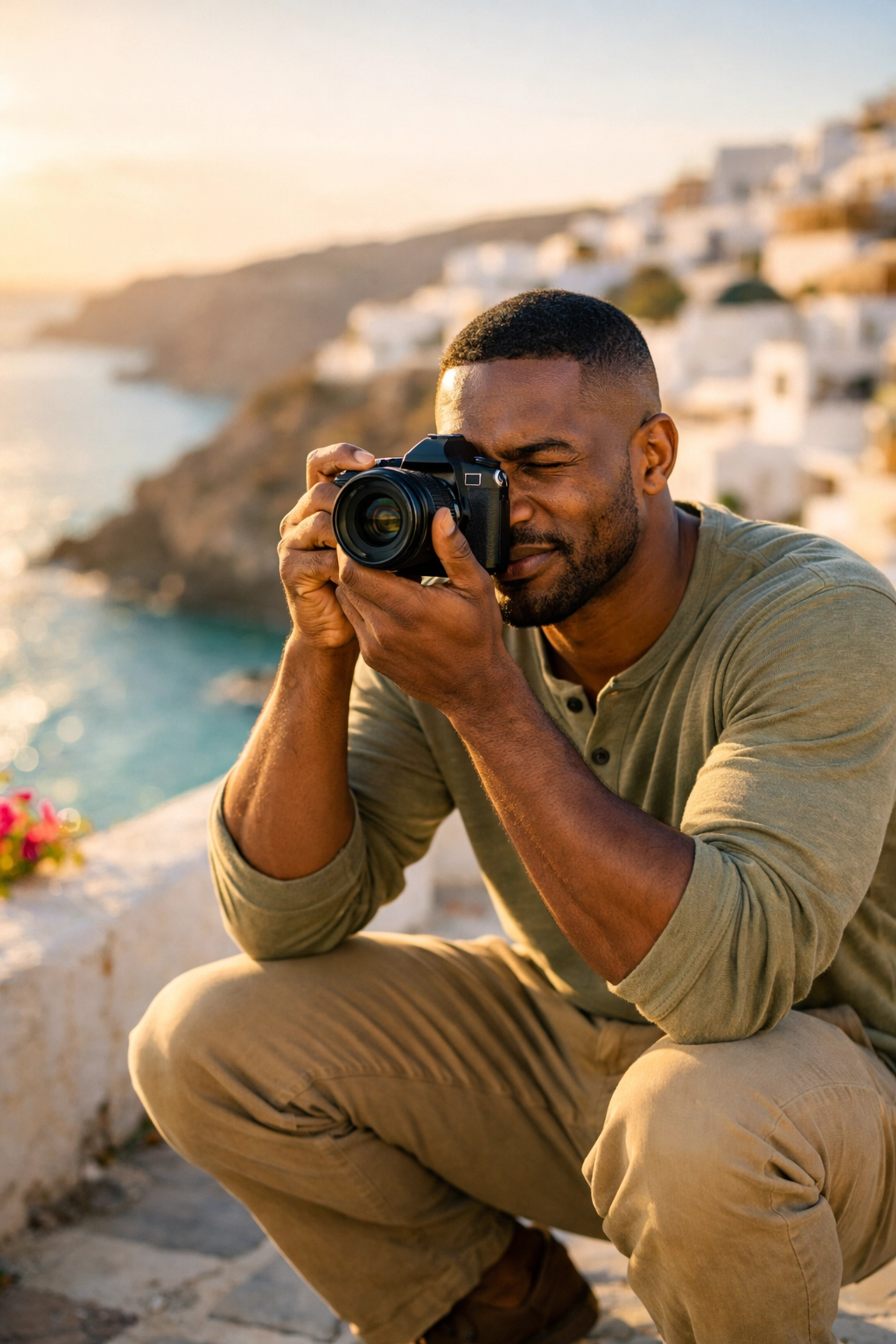
Here's the truth about portfolio building: You need to treat every trip like a working assignment, even if no one's paying you yet. That means waking up before sunrise for better light, revisiting locations multiple times to get the shot right, and sometimes choosing photo ops over spontaneous adventures.
Create a shot list before each trip. What content gaps exist in your portfolio? If you've nailed beach sunsets but have zero urban architecture shots, prioritize cities on your next itinerary. If your portfolio lacks cultural experiences, seek out local markets, festivals, or cooking classes.
Document everything: not just the highlight reel. Brands increasingly want authentic, relatable content that shows the messy middle of travel: airport delays, language barriers, navigation fails. These "real" moments build trust with your audience and demonstrate you can create honest, engaging stories.
Save your location data and keep notes about each shoot. When you pitch to brands six months later, you'll need specifics: "Shot at sunrise from the third-floor balcony of [Hotel Name], using natural light with iPhone 14 Pro, edited with VSCO A6 preset." This level of detail signals professionalism.
The Storytelling Framework That Works
Good travel content answers one simple question: "What does this feel like?" Not what it looks like: we can all Google that. But what does it feel like to sip that overpriced cappuccino while watching gondolas drift past? What does the air smell like in a Moroccan spice market at 6 AM?
Your captions and video scripts should transport the reader. Use sensory details. Share the unexpected moments. Admit when something didn't go as planned. The best travel storytelling acknowledges both the magic and the reality: because that's what creates genuine connection.
Try this exercise: Write a 150-word caption about your last trip without using any of these words: amazing, beautiful, incredible, stunning, breathtaking. You'll be forced to dig deeper and find more specific, memorable language. "The gelato tasted like summer thunder" beats "The gelato was amazing" every single time.

Organizing Your Portfolio for Brands
Your portfolio isn't a personal photo album: it's a business tool designed to answer three questions:
What type of content do you create?
How does it help brands achieve their goals?
What's the quality and consistency level?
Create separate portfolio versions for different brand categories. If you're pitching to Caribbean resorts, lead with beach content. Pitching to river cruise lines? Showcase European waterways and cultural experiences.
Include testimonials if you have them: even informal ones. A screenshot of a hotel manager thanking you for posting about their property carries weight. If you don't have testimonials yet, focus on metrics: "This Reel generated 45K views and 127 saves within 72 hours."
Essential portfolio elements:
Your name, location, and best contact email (make it easy for brands to reach you)
Your content specialty clearly stated upfront
10-15 of your absolute best pieces (quality over quantity)
Brief descriptions of what you delivered and any measurable results
A one-paragraph bio that explains your unique angle
Remember: Your portfolio showcases creative ability. Your media kit (which we'll cover in Part 3) demonstrates audience reach. Don't confuse the two.
The Uncomfortable Truth About Getting Started
Building a portfolio that lands paid partnerships takes time. You'll shoot hundreds of photos that never see the light of day. You'll create content that flops. You'll watch accounts with "worse" content somehow get brand deals while you're still posting into the void.
This is normal. Every successful travel creator started exactly where you are: with a phone, a dream, and zero followers. The difference between those who make it and those who quit isn't talent or luck. It's consistency and patience.
If you're planning a trip and want to maximize the content opportunities, I'd love to help you design an itinerary that balances genuine exploration with strategic photo ops. Sometimes the best content comes from bucket-list destinations you've been dreaming about anyway: you just need to approach them with a creator's mindset.
As an Omaha-based travel agent working with clients nationwide, I've helped dozens of aspiring creators plan trips that served double duty: incredible personal experiences and portfolio-building opportunities. The secret is choosing destinations with visual diversity and strong storytelling potential.
Ready to turn your next vacation into a portfolio powerhouse? Let's chat about where you should go next.
Next up in Part 3: We'll tackle the social media strategy that actually grows your following and gets brands sliding into your DMs. Spoiler: It's not about posting more; it's about posting smarter.
Comments