


Travel Deal Secrets Revealed: What Those "Too Good to Be True" Ads Don't Want You to Know

You're scrolling through your feed and boom, there it is. "7 nights in Cancún for $299!" or "Free Caribbean cruise, just pay port fees!" Your finger hovers over the link. Part of you is excited. Part of you knows something feels off.
Here's the thing: not every deal is a scam, but plenty of them are designed to separate you from your money in the sneakiest ways possible. As your Omaha travel agent who's been navigating this industry for years, I've seen it all, and I'm pulling back the curtain on what those flashy ads don't want you to know.
The Hidden Fee Game: When $299 Becomes $899
Let's start with the most common trick in the book. That "shockingly low" base price? It's bait. What they don't tell you until you're deep into the booking process is that cleaning fees, resort fees, service charges, taxes, and "processing fees" are about to double or triple your total.
Here's how it works: the ad shows you a rock-bottom price to get you emotionally invested. You start picturing yourself on that beach. You tell your partner about it. You're already mentally packed. Then, right before you hit "confirm," the real price appears, and it's suddenly not such a bargain anymore.
Legitimate travel providers are upfront about costs from the start. If a deal makes you squint and wonder "what's the catch," there probably is one.
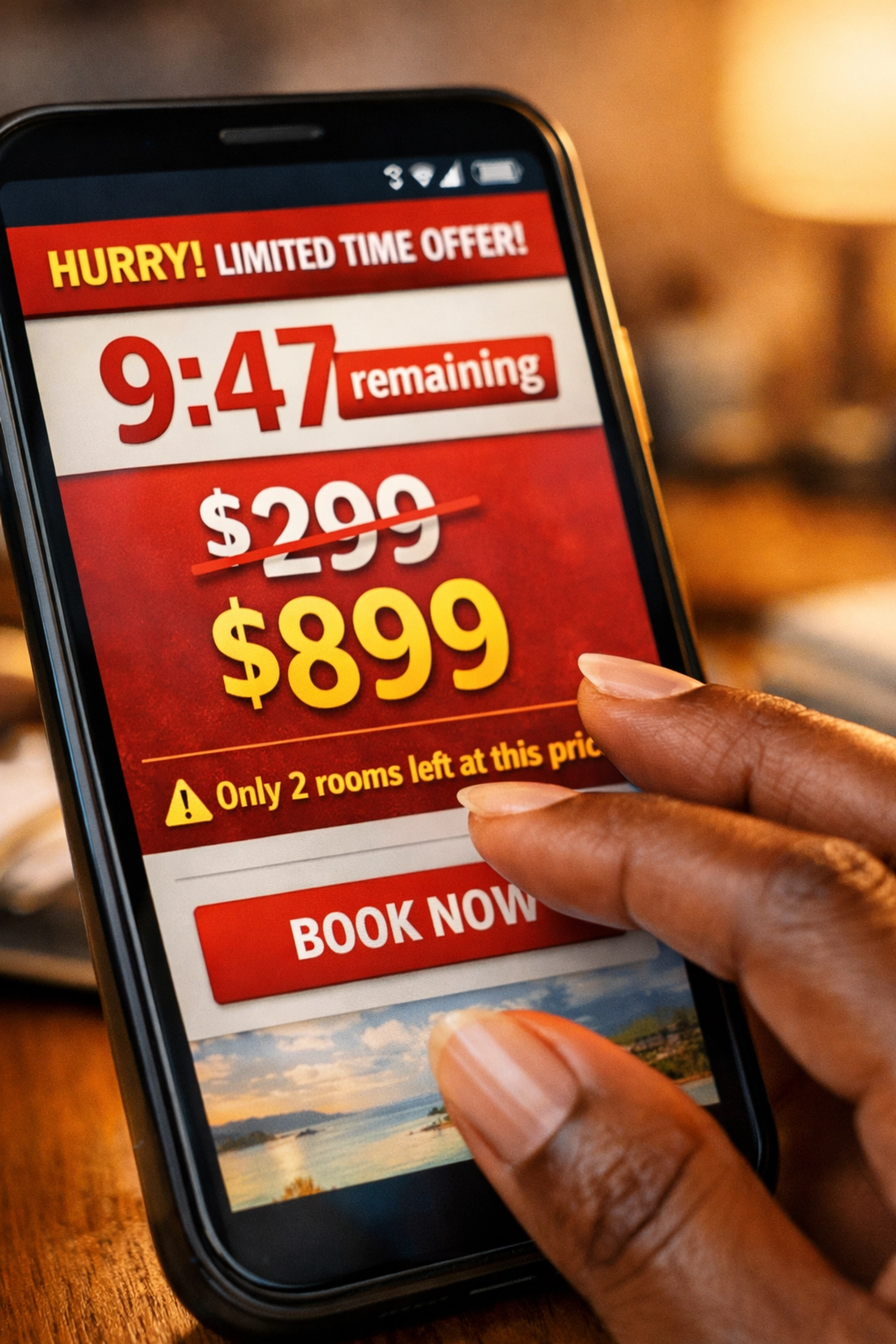
The Countdown Clock: Fake Urgency That Costs You Real Money
"This deal expires in 10 minutes!" "Only 2 rooms left at this price!" Sound familiar?
This is artificial urgency, and it's designed to override your better judgment. Scammers know that if you have time to think, compare prices, or, heaven forbid, call someone like me to verify the deal, you'll realize it's garbage.
Real travel deals do have expiration dates, but they don't force you into a panic. A legitimate travel planning service will give you breathing room to make an informed choice, ask questions, and understand exactly what you're booking.
If someone's pushing you to "act now or lose out forever," pump the brakes. That pressure is a red flag, not a courtesy.
The Phantom Property: Paying for Places That Don't Exist
This one's particularly nasty. You book what looks like a gorgeous beachfront condo through an ad or third-party site. You pay upfront (usually via wire transfer or gift card, more on that in a sec). You show up excited, ready to check in, and…nothing. The property doesn't exist, or it's already occupied by someone else who also got scammed, or it looks nothing like the photos.
Scammers hijack real vacation rental listings, steal photos, and create fake ads. They'll even respond to your questions professionally, send fake confirmation emails, and disappear the second your money clears.
How do you protect yourself? Book through verified platforms with buyer protection, or work with a travel agent who vets properties directly. When I help clients book accommodations, whether it's a romantic getaway or a group trip, everything is verified, insured, and backed by real people you can contact.

Payment Red Flags: When "Pay This Way" Means "Say Goodbye to Your Money"
If someone insists you pay via wire transfer, cryptocurrency, or gift cards (yes, gift cards), run. These payment methods are virtually untraceable and impossible to reverse once the money's gone.
Why do scammers love them? Because they know once you pay, they can vanish without a trace. No chargeback. No dispute process. No getting your money back.
Credit cards offer buyer protection. PayPal has dispute resolution. Legitimate travel companies accept these standard payment methods because they have nothing to hide. When a "deal" pushes you toward sketchy payment methods, that's your sign to walk away.
The Disappearing Act: When Your Dream Trip Evaporates
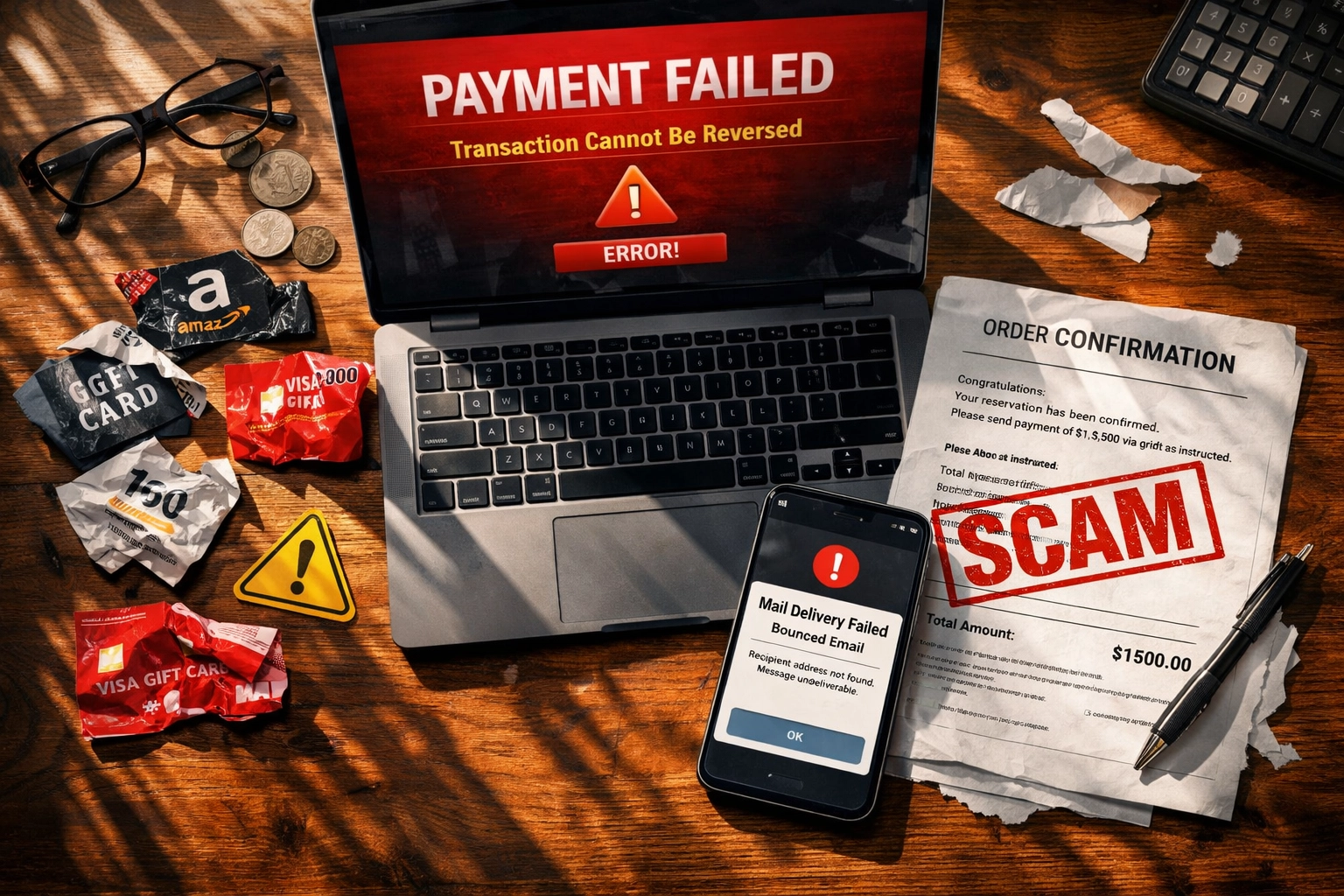
Here's how the endgame plays out: you book the deal. You pay. You get a confirmation email that looks legit. Then, as your departure date approaches, you try to confirm details and…silence. Emails bounce. Phone numbers are disconnected. The website's gone.
These scammers operate through temporary social media accounts, unsolicited robocalls, or cloned websites designed to look like real travel agencies. They collect payments from as many people as possible, then vanish into thin air.
This is why working with a real, established travel agent matters. We're not going anywhere. You can walk into our office (or call us directly) and we're accountable for every booking we make.
Vague Details Are a Feature, Not a Bug
Ever notice how some "amazing deals" are suspiciously short on specifics? No hotel name. No airline listed. No clear cancellation policy. Just vague promises of "luxury accommodations" and "paradise locations."
That vagueness is intentional. It prevents you from independently verifying anything. You can't Google the hotel reviews. You can't check if the airline actually flies that route. You can't compare the offer to legitimate options.
Real deals provide details. When I send clients options for Viking river cruises or Caribbean packages, you get ship names, cabin categories, excursion details, and transparent pricing. No mystery boxes. No surprises.
How to Spot a Genuine Deal (and How Your Omaha Travel Agent Helps)
So what does a legitimate travel deal look like? Here's your quick checklist:
Transparent pricing – All fees disclosed upfront, not hidden until checkout Verifiable details – Specific hotel names, flight info, and booking references you can independently check Standard payment methods – Credit cards, checks, or PayPal: never wire transfers or gift cards Clear cancellation policies – You know exactly what happens if plans change Realistic pricing – If it seems impossibly cheap, it probably is
As an Omaha travel agent who works with clients nationwide, I spend my days vetting deals, negotiating with suppliers, and making sure what you see is what you actually get. That "too good to be true" cruise deal? I can tell you in 30 seconds if it's legit or if you're about to waste your money.
I work directly with Disney cruises, Virgin Voyages, Oceania, and dozens of other trusted partners. My job is to get you the real deals: the ones backed by actual companies who won't vanish when you need help.

When Good Deals Happen to Smart Travelers
Not every eye-catching offer is a scam. Flash sales happen. Wave season brings legitimate cruise discounts. Shoulder season means real savings on popular destinations.
The difference? Legitimate deals come from established companies with track records you can verify. They're promoted through official channels. They follow standard booking practices. And when something goes wrong (weather, cancellations, last-minute changes), there's someone accountable to make it right.
That's where I come in. I monitor promotions daily, including last-minute cruise deals and summer booking windows. When a genuine opportunity pops up, I'm reaching out to clients who'd benefit. No pressure. No fake countdown clocks. Just real value.
Your Next Move
If you're staring at a deal right now wondering if it's legit, don't guess. Send it my way. I'll look at the fine print, verify the supplier, and tell you straight whether it's worth your money.
Travel should feel exciting, not stressful. You deserve a vacation that actually delivers what it promises: and a travel planning partner who has your back from research through return. Ready to book something real? Let's talk.
Comments