


7 Mistakes You Are Making with Travel Agent Email Follow-Ups and How to Turn Inquiries Into Bookings

Ever wonder why some travel agents convert 50% of their leads while others are stuck at 10%? The difference is rarely about the destinations you sell or the deals you offer. It usually comes down to one thing: how you handle travel agent email follow-ups.
Most agents lose bookings in their inbox, not because they are bad at their job, but because they are making predictable mistakes that push warm leads away. The good news? Every single one of these mistakes is fixable, and fixing them can double or even triple your conversion rate.
As an Omaha-based travel agent serving clients nationwide, I have seen these patterns play out hundreds of times. Let me walk you through the seven most common email follow-up mistakes, and exactly how to turn those inquiries into confirmed bookings.
Mistake #1: You Are Taking Too Long to Respond
Speed matters more than you think. When someone fills out a quote request or sends you an inquiry, they are in research mode right now. They might have three other tabs open with your competitors. If you wait until the next morning (or worse, Monday) to reply, you have already lost momentum.
The Fix: Aim to respond within one hour of receiving a lead. Even if you cannot provide a full quote yet, send a quick acknowledgment email that says you received their request and will have a personalized proposal within 24 hours. That one-hour window is golden. Travelers who hear from you first are far more likely to book with you.
Set up email alerts on your phone. Use autoresponders if you are off the clock. Show them you are paying attention, because if you are not, someone else will.

Mistake #2: You Are Using One-Size-Fits-All Templates
Generic email templates kill conversions. You know the ones, "Thank you for your interest in travel! Here is some information about destinations we offer." Those emails feel automated, impersonal, and forgettable.
The Fix: Reference the specifics they shared with you. If they mentioned traveling with kids, acknowledge that. If they asked about all-inclusive resorts in Mexico, talk about Mexico. If they are celebrating an anniversary, congratulate them and mention romantic upgrade options.
Personalization does not mean writing a novel from scratch every time. It means tweaking a solid template with their name, destination, travel dates, and any unique details they shared. That small effort makes them feel seen, and it sets you apart from every other agent sending cookie-cutter replies.
Mistake #3: You Are Only Using Email (and Missing Half Your Leads)
Relying solely on email follow-ups is a fast way to lose leads. Some people prefer texts. Others check WhatsApp constantly but rarely open their inbox. If you are only emailing, you are missing opportunities to connect with travelers who just do not live in their email.
The Fix: Use multiple channels strategically. After your first email, follow up with a text message or WhatsApp within 48 hours if you have not heard back. You might say something like, "Hi [Name], I sent over a quote for your Cancun trip, did you get a chance to check your email? Happy to answer any quick questions here!"
Do not spam them across five platforms at once. Start with email, then move to one other channel if they are not responding. Different people have different communication preferences, and meeting them where they are can be the difference between a booking and radio silence.
Mistake #4: Your Follow-Ups Are Not Adding Any Value
Checking in without giving them something useful is a wasted touchpoint. Emails that say "Just following up to see if you had any questions" feel pushy and empty. If every follow-up is just you asking for a decision, you are training them to ignore you.
The Fix: Every follow-up email should include value. Share a packing tip for their destination. Send a link to a blog post about what first-timers should know. Mention a limited-time deal or cabin upgrade that just became available. Give them a reason to open the email beyond "this agent wants my money."
For example: "Hi Sarah, I know you were considering that adults-only resort in Jamaica. I just found out they are offering a free room upgrade for bookings made this week, thought you'd want to know!" That is helpful. That builds trust. That gets replies.
Mistake #5: You Are Following Up Too Much (or Not Enough)
There is a fine line between persistent and annoying. Some agents give up after one email. Others send daily check-ins until the lead blocks them. Both extremes cost you bookings.
The Fix: Follow a proven cadence. Here is what works for most travel agents:
Hour 1: Initial response acknowledging their inquiry
Day 1: Send the full personalized proposal with itinerary and pricing
Day 3: Follow-up email adding value (deal alert, destination tip, FAQ)
Day 7: Final follow-up with a soft call-to-action ("Let me know if you would like me to hold these dates")
If they have not responded after day 7, move them to a nurture sequence where you send occasional destination inspiration or deal alerts. Do not ghost them, but do not harass them either. You are aiming for polite persistence, not desperation.
And if they explicitly tell you they booked elsewhere or are no longer interested? Respect that. Thank them for their time and let them know you are here if plans change. Professionalism leaves the door open for future referrals.
Mistake #6: You Are Not Tracking Your Follow-Ups
Flying blind with your email follow-ups is a recipe for chaos. If you are not logging interactions, you will accidentally email someone twice in one day, forget to follow up with a hot lead, or lose track of who is waiting on what information.
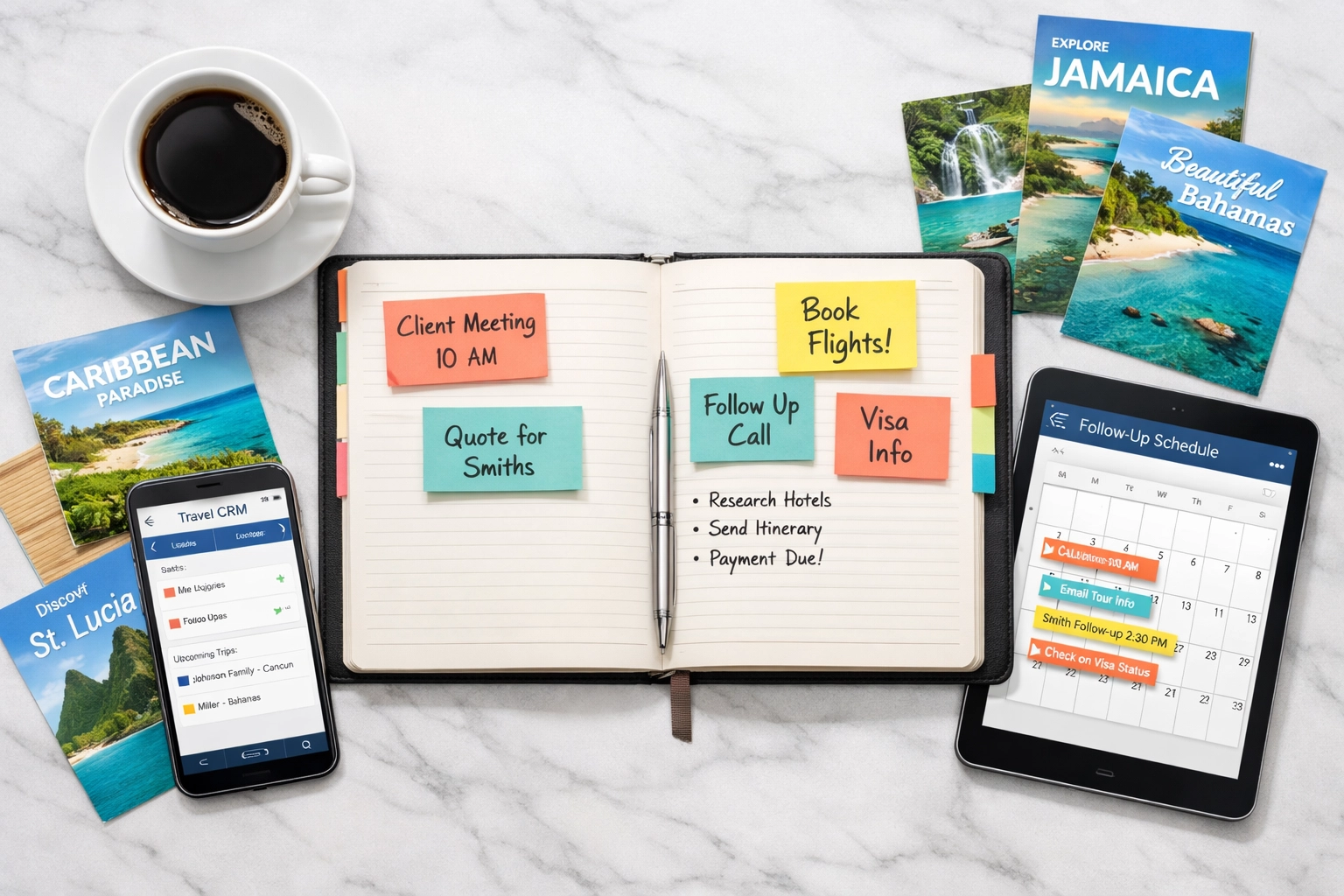
The Fix: Use a CRM system or even just a simple spreadsheet to track every lead. Log the date of each email, what you sent, and when you need to follow up next. Set reminders so nothing falls through the cracks.
Your tracking system does not have to be fancy. It just has to work. Knowing exactly where each lead stands in your pipeline lets you prioritize the ones most likely to book and ensures you are not over-communicating or under-communicating with anyone.
Mistake #7: Your Emails Do Not Build Trust or Overcome Objections
Most email follow-ups focus on logistics, dates, pricing, availability. But travelers are not just deciding on a trip. They are deciding whether to trust you with their money, their vacation time, and their expectations. If your emails are not addressing their hidden concerns, they are not doing their job.
The Fix: Anticipate objections and answer them proactively in your follow-ups. Common concerns include:
"What happens if I need to cancel?"
"Is this price really the best deal?"
"What if something goes wrong while we are traveling?"
Weave reassurance into your follow-up emails. Mention your cancellation policies, travel insurance options, and the fact that you offer 24/7 support. Include a quick testimonial from a past client. Link to a relevant blog post like this one on how travel agents provide peace of mind or why working with a professional beats DIY booking.
The more you can reduce perceived risk, the easier it becomes for them to say yes.
Bonus: Make It Easy to Say Yes
Do not make your leads work too hard. Your follow-up emails should have clear next steps. Instead of "Let me know what you think," try "Reply YES if you would like me to hold these dates" or "Click here to schedule a quick 15-minute call to finalize details."
Reduce friction. Remove confusion. Give them one simple action to move forward, and watch your conversion rate climb.
The Follow-Up Framework That Actually Works
Let me give you a real example of an email sequence that turns inquiries into bookings:
Email 1 (within 1 hour): "Hi Jessica! I just got your request for an anniversary trip to the Caribbean in June. I am already pulling together some amazing options for you and will send over a full proposal by tomorrow morning. In the meantime, do you have a preference between all-inclusive resorts or boutique hotels?"
Email 2 (Day 1): Send a detailed proposal with 2-3 resort options, pricing breakdown, what is included, and a link to your request-a-quote page if they want to move forward.
Email 3 (Day 3): "Hi Jessica, I wanted to share this quick guide on what to expect at adults-only resorts since you mentioned wanting a quiet, romantic vibe. Also, the resort I recommended in option 2 just added a spa credit for June bookings: thought you would want to know!"
Email 4 (Day 7): "Hi Jessica, just checking in one last time! June is booking up fast, so if you are leaning toward one of these resorts, let me know and I can hold your dates with a deposit. If you need more time or want to explore other options, I am here to help."
Notice how each email adds value, reduces friction, and gently moves the conversation forward. That is the difference between follow-ups that feel pushy and follow-ups that feel helpful.
Your Omaha-Based Travel Agent is Here to Help (Nationwide)
Email follow-ups are not about being aggressive. They are about being present, helpful, and persistent in a way that builds trust. When you fix these seven mistakes, you stop losing leads in your inbox: and you start turning more inquiries into real, confirmed bookings.
As your Omaha-based travel agent with a global reach, I have tested and refined this follow-up framework across hundreds of clients. The agents who implement these strategies consistently see their conversion rates double within 60 days. It works because it treats leads like real people with real concerns: not just potential commissions.
If you are not already a travel agent and stumbled upon this - it could be a sign that your next move is a flight to freedom. Learn more about how to become a travel agent.
Comments